
Royal Botanic Garden: Wollemi Pine and Bermuda Cedar
I’ve always thought the Royal Botanic Garden Sydney has one of the best locations of any botanic garden in Australia. It sits on Gadigal Country, right beside the harbour, with the city, the Opera House and the water constantly in view.
It is easy to treat the Garden as a beautiful shortcut. But it is not only scenery. It is also a place of living collections, where plants carry stories of land, survival, movement and care.
This time, I came with a purpose.
My friend Mavis and I decided to look for one of the rarest trees in the world: the Wollemi pine (Wollemia nobilis). I had often walked past the one outside Camden Cottage, but had never properly visited the one inside the Garden.
The Garden’s website gives its location clearly, so it did not take us long to find. At first glance, the Wollemi pine does not look dramatic. To me, it almost looked like an ordinary pine tree. But the story it carries is extraordinary.
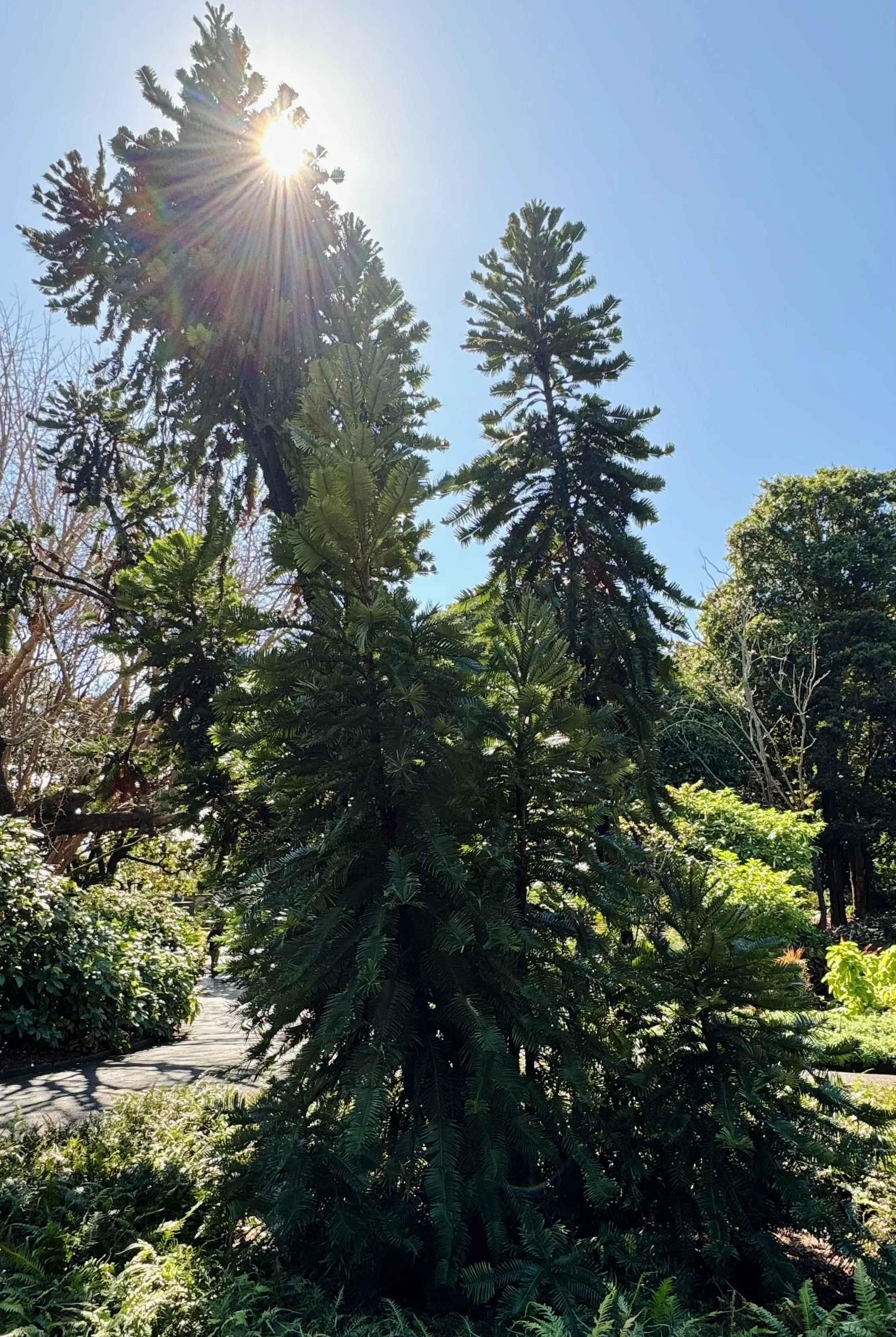
The Wollemi pine belongs to an ancient plant family with a history stretching back around 200 million years. For a long time, it was thought to be known only from the fossil record, until living trees were found in 1994 in a remote gorge in Wollemi National Park. The wild population is still extremely limited, and its exact locations are protected.
Standing in front of it, I noticed the leaves: neat, feather-like rows along the branches, delicate but strangely steady. This one is still young, but it carries the feeling of deep time, survival and careful protection.
On our way out, walking toward the Art Gallery of New South Wales, another tree stopped me.
Near the information booth stood a Bermuda cedar (Juniperus bermudiana), tall and beautifully shaped. Its trunk was thick and textured, the bark ridged with detail. Branches stretched outward in every direction, as if holding the space around it. I loved it instantly.
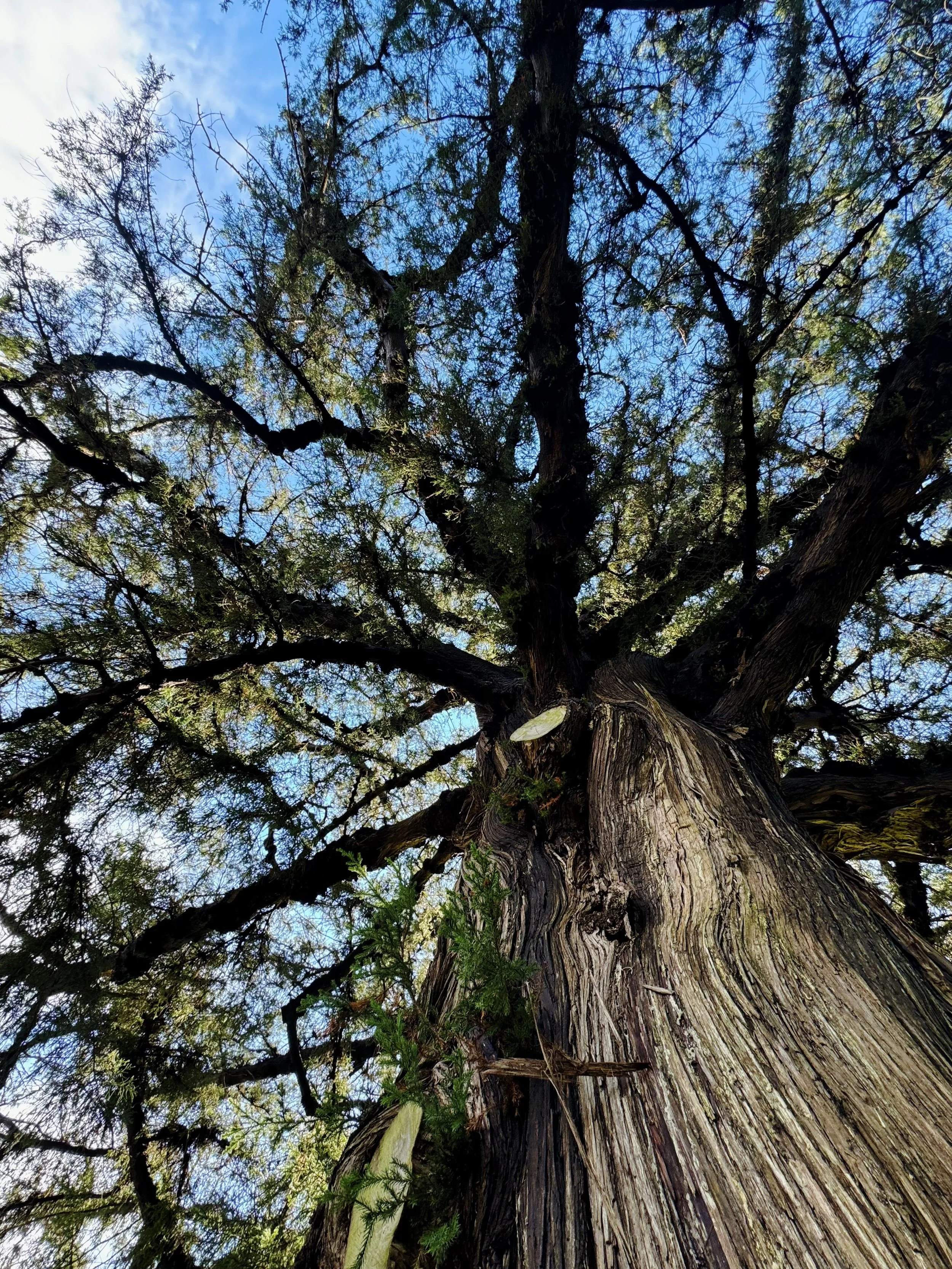
The Bermuda cedar is native to Bermuda and was once a dominant part of the islands’ landscape. In the mid-twentieth century, introduced scale insects devastated the species, and most of the old cedar landscape disappeared. Seeing one alive and thriving here in Sydney felt like a quiet gift.
We had set out to find one rare tree and ended up meeting two survivors.
This is why I keep recommending the Garden, not only as a beautiful place to walk, but as a place where living collections make deep time feel close. Botanic gardens do not only preserve plants. They can also hold evidence of extinction, movement, care, accident and recovery.
I left already looking forward to my next visit.
