
Places I Keep Showing People in Sydney
The Sydney They Already Know
When friends or family come to Sydney for the first time, I usually do not need to plan their first day.
They already know what they want: the Opera House, the Harbour Bridge, QVB, maybe Bondi if the weather is good, or Manly if they want the ferry. I understand this completely. I still like seeing the harbour through someone else’s first-time eyes.
But after that first day, when the main photos are done and everyone has recovered from walking more than they expected, they start looking at me differently.
Because I live here, they assume I have another map in my head: the Sydney I live in, not just the Sydney they searched before the trip.
Maybe I am not really showing them the “real Sydney”. Maybe I am just choosing where to pause.
Not all of these places are heritage sites. Some are official, some are ordinary places I keep returning to. But together they show how Sydney remembers, changes, and gets used.
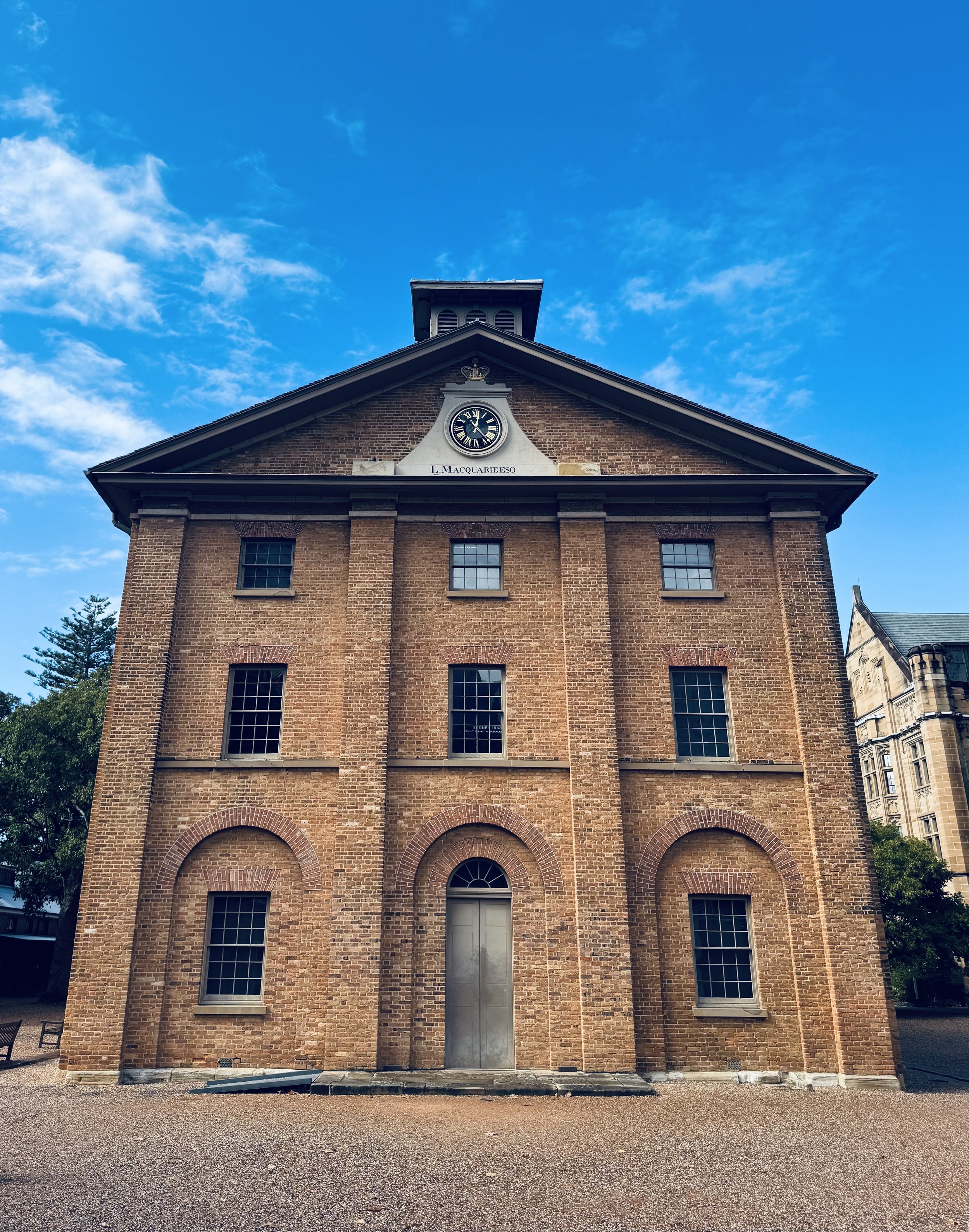
Where I Start Slowing Down
I would probably start at Hyde Park Barracks. It is one of my favourite museums in Sydney, maybe even in Australia. The building was constructed between 1817 and 1819 to house convict men and boys, and it is now part of the UNESCO-listed Australian Convict Sites. That sounds very official, but the reason I like it is simpler: the museum makes people listen.
You walk through with the audio guide and the building becomes less empty. Convicts, immigrant women, children, institutions, work, waiting, rules, survival. It gives people a way into colonial Sydney without assuming they already know the story.
Hyde Park Barracks is also on Gadigal Country, a reminder that and “old Sydney” does not begin with sandstone buildings or convict labour. I am still learning how to talk about Aboriginal history properly. Sometimes the most honest thing I can do is notice where I am standing, and remember that the city has older stories than the ones that became plaques.
From there, I like walking to the State Library of NSW. A library is not the most dramatic place to take a visitor, but I like that. Its origins go back to the Australian Subscription Library in the 1820s. Now it holds books, maps, manuscripts, photographs, oral histories and all kinds of evidence a city leaves behind. It changes the mood. You are not just looking at Sydney. You are allowed to research it.
If we are near Circular Quay, I ask people to look down.
Most people look up there, which makes sense. The bridge is up. The sails are up. The ferries move across the water and everyone takes the same photo, because honestly it is a good photo. But on the ground there is the Sydney Writers Walk, those round plaques set into the pavement.
I like how easy they are to miss. Names and words under everyone’s shoes. It is not a perfect record of Australian writing, of course. Nothing in public space ever is. But it is a good small interruption. You are walking to the Opera House, and suddenly a sentence stops you.
Book, Food and Everyday City Life
After that I would probably go back into the city, around Town Hall.
Kinokuniya feels like Sydney in several languages at once. Dymocks still makes George Street feel like a place where people browse, not only pass through. Regent Place is where I go when I cannot decide what to eat. It is close to Town Hall, slightly hidden, and full of ramen, bubble tea, matcha, desserts and small shops. I would not put it on a serious itinerary, but if we are tired or hungry in the city, I would probably end up there.
Then I would take them towards the Chinese Garden of Friendship and Chinatown.
The Chinese Garden opened in 1988 and was designed through Sydney’s relationship with Guangzhou. It is easy to treat it as just a pretty garden, but that feels too thin. It is also about Chinese-Australian community history, design, diplomacy and the way culture is represented in another place.
Then you step outside and Haymarket is moving in every direction.
I do not like describing Chinatown as if it is a decorative cultural display. It is not there to perform “Chinese culture” neatly for visitors. It is restaurants, groceries, students, families, tourists, workers, dessert shops, Thai Town nearby, Darling Square nearby, people arguing about where to eat. For Chinese friends and family, it can feel familiar and not familiar at the same time. For non-Chinese friends, it is one of the easiest ways to see that Sydney is not only colonial sandstone and harbour views.
Where The City Keeps Changing
Newtown is another kind of Sydney again.
I like Newtown because it has never felt too polished to me. It has bookshops, cafes, old shopfronts, posters, clothes, music, rainbow crossings, students, and people who look like they dressed for themselves and no one else. It is also expensive now, and changing, and sometimes too aware of its own coolness. But I still like it.
The graffiti matters too. Around Newtown and towards St Peters, walls change. Some things stay for years, some disappear quickly. I would not promise one perfect wall to someone visiting. I would rather just walk and see what is there that day. A wall remembers something for a while, then forgets it.
From there, I like moving towards Carriageworks and South Eveleigh.
Carriageworks occupies part of the former Eveleigh Railway Workshops, one of Sydney’s major industrial sites. By the 1900s, thousands of people worked there building and maintaining the rail network. Now it is an arts precinct, but you can still feel the scale of work in the building. I like that kind of reuse. Not the kind where everything old is polished until it becomes decoration, but the kind where the building still has weight.
St Peters and Sydney Park add another layer. Sydney Park has wetlands, dogs, runners, children learning to ride bikes, and the old brick kilns and chimneys near the edge. I like places where the city shows that land has had more than one life. Industry, waste, parkland, weekend picnics. Not a clean story, but a real one.
And then there is Burwood.
I know this is a big statement, but Burwood is one of the coolest suburbs in the world.
Not because it is polished. Not because it is trying to be cool. That is exactly why I like it. Burwood is busy, hungry and practical. You hear Mandarin, Cantonese, English and other languages moving around each other without anyone making a big deal of it.
I would take someone there for food. Maybe to the Chinese pancake place I like. I do not need to explain everything. Sometimes the best way to understand a city is to stand on a busy street eating something hot from a paper bag.
The Opera House is Sydney, of course. But so is a library desk, a wall that might be painted over next week, the sound of trains near Eveleigh, and Burwood at dinner time.
I think that is what I want visitors to see: not just where Sydney looks beautiful, but where it leaves traces.
