
A Walk Through Sans Souci
Today’s weather was too lovely to stay indoors, so I went to Lady Robinsons Beach for a quiet walk through Sans Souci, one of Sydney’s softer coastal suburbs.
It is not a place that announces its history loudly. That is partly why I wanted to look more carefully.
I have always liked the name. Sans Souci sounds soft and slightly foreign, almost too elegant for a suburb you reach by bus and footpath. It comes from the French phrase meaning “without care” or “carefree”. The Sydney suburb took its name from a house called Sans Souci, built on Rocky Point Road in the 1850s by Thomas Holt, a wool merchant and politician. The name itself refers back to Sanssouci Palace in Potsdam, the summer residence of Frederick the Great.
So before the walk really began, the place had already travelled a long way: from a Prussian palace, to a colonial estate, to a Sydney suburb by the water.
I walked along the shore under the winter sun. The breeze was just cool enough to remind me it was still winter, but not enough to make me want to leave. This part of the coast is Lady Robinsons Beach, once known as Seven Mile Beach. It was later renamed after Lady Robinson, wife of the Governor of New South Wales, Sir Hercules Robinson.
It is easy to look at the beach only as a pretty place to walk. But names like these make the shoreline feel less simple. They carry traces of colonial leisure, land ownership, public recreation and the way places are renamed over time
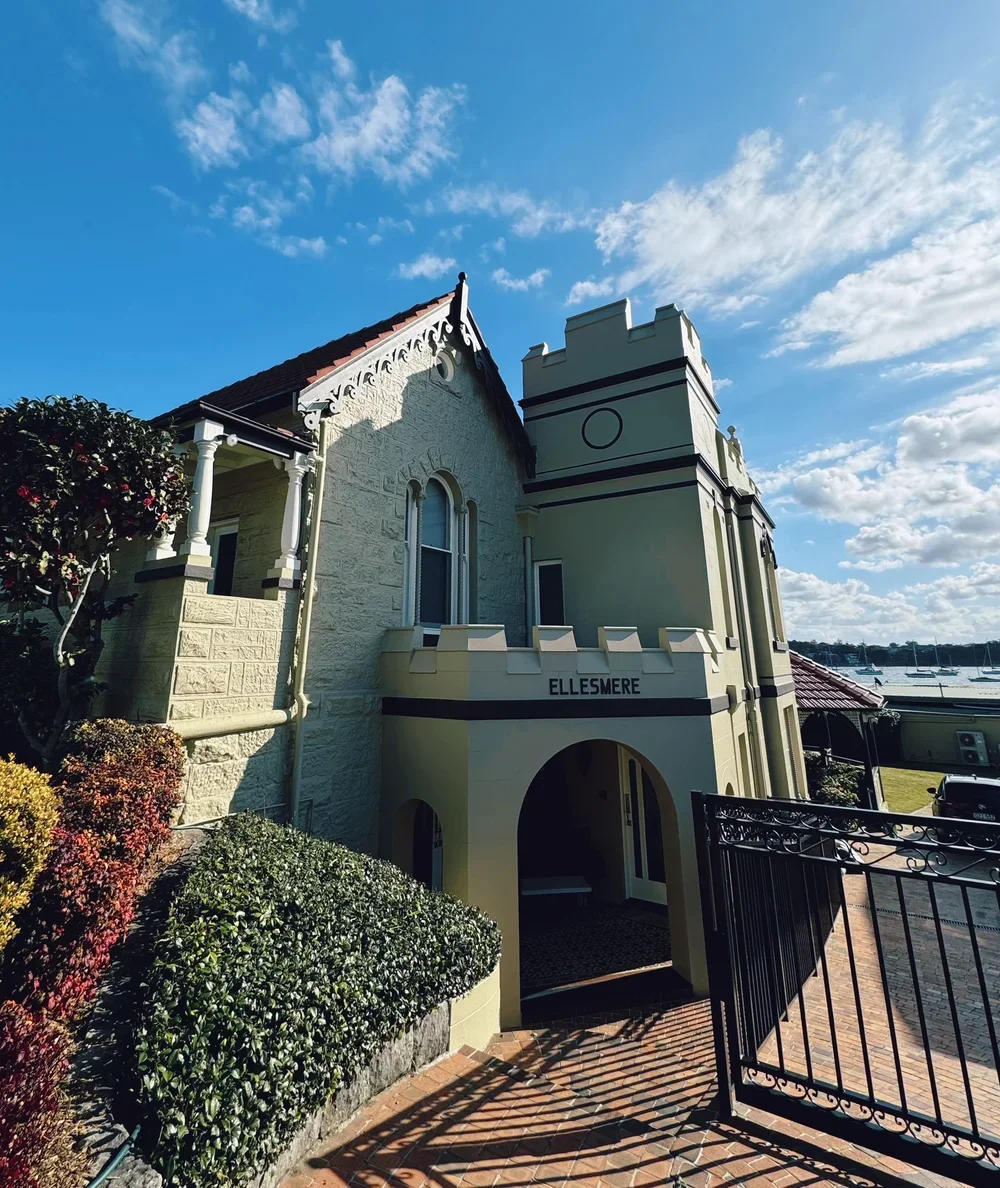
Later, I walked past Ellesmere at 23 Vista Street, a heritage-listed house associated with Sir Joseph Carruthers, a former Premier of New South Wales. Even from the street, the house stood apart from the quieter suburban surroundings. It made me think about how some histories stay visible because they are built in stone, fenced, listed and named.
But this coast has older histories too.
I am still trying to understand the Aboriginal histories of this shoreline more carefully. Around Botany Bay, Kogarah Bay and the Georges River, Aboriginal people lived with these waters long before colonial estates and seaside suburbs appeared. That matters here, because the beach is not only a leisure landscape. It is part of a much older coastal world.
Near Endeavour Street Reserve, I stopped by a quiet anchor monument facing the water. It did not demand much attention. That was partly why I liked it. Some markers in the landscape are small, and you only notice them if you are walking slowly.
On my way back, I saw a small blossom and stopped to take a photo.
That was the walk, really: a beach, a suburb name, a house, a memorial, a flower. Nothing dramatic. But sometimes a place becomes interesting because you give it a little more attention than usual.
